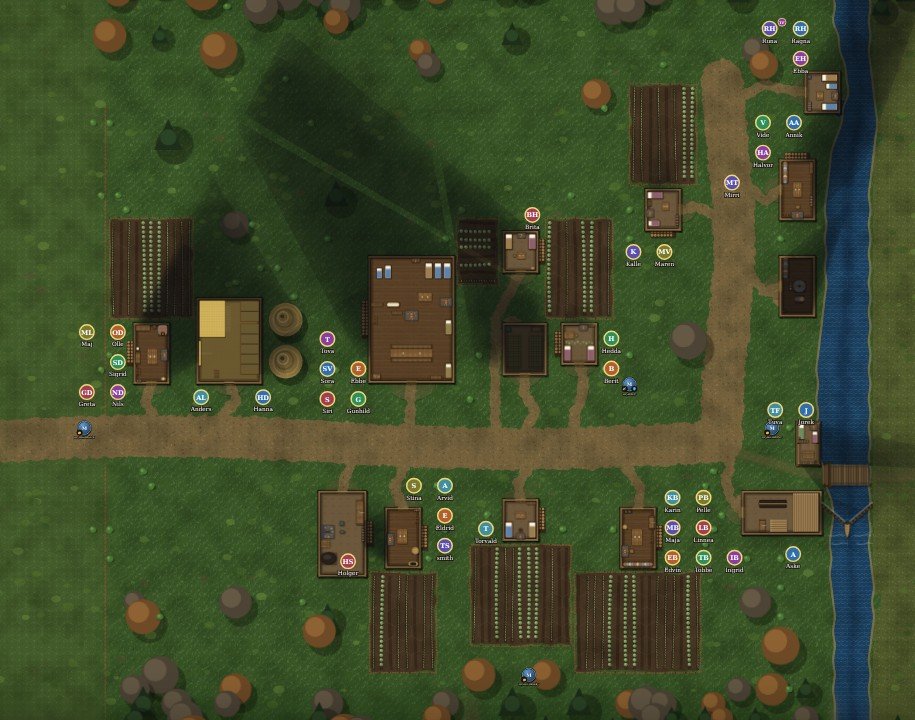
An ordinary day
Every person has a plan for their day: where they go, what they do, and with which skill. The carpenter works in the yard by the weir, the innkeeper keeps the fire in the common room, the bridge-keeper mends his net at the gatehouse door. Unless something happens, life goes on as usual.
Real paths, real time
Persons walk the village lanes at walking pace, on the real map. A walk to the mill takes as long as the walk takes. Where someone is at any moment follows from where they set out and where they are going.
Trade at Shirania prices
When persons buy and sell, the price comes from the game's own price lists and the haggling from its own dice rules. Every metre of rope and every kilo of grain is counted.
Things wear out
Tools, rope and roofs have a durability. When something wears out, its owner buys a new one or makes it, if they know the craft and making it is cheaper. A failed attempt costs the materials.
Weather and seasons
Ashlow has its own weather: fog over the river meadows, frost, rain fronts and sand that dries in a day. The Shirania year runs on its own calendar, and the village lives through its seasons.
Skills that grow
What a person practises, they get better at, slowly and by the same experience rules as a player character.
When the unexpected happens
The goal is a good everyday life for everyone. The game master can bring in an event at any time: a stranger at the gate, a broken bridge, a fire. Then the players of the persons involved are called to decide what happens next. That is how you learn how the village, and Shirania's responsibility system, really work: by living it.
We are working on a video that shows how the village works. It will come as soon as the work behind it is done.
The interactive map, battles included, is part of the subscription. Ashlow shows what it is growing into: the map, the world builder and NPC management coming together in one living village.